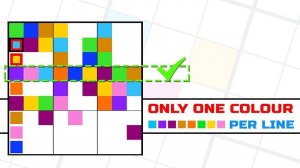
Game Introduction
Color Grid Logic Puzzle is a logic puzzle game that challenges your pattern recognition and strategic thinking. The core objective is to fill a grid with colors, making sure each color appears only once in every row and column. This concept is similar to Sudoku but uses colors instead of numbers, making it visually engaging and accessible. The game offers a calm yet engaging mental workout, suitable for players of all ages. With a clean design and intuitive interface, it provides endless fun and cognitive exercise. Each level increases in complexity, keeping the challenge fresh and rewarding. The game is designed to be relaxing, focusing on logical deduction rather than speed or reflexes. It is perfect for anyone looking to sharpen their mind in a peaceful setting.
How to Play
To play, examine the grid and note which colors are already placed. Tap or click an empty cell, then select a color from the palette. Ensure no color repeats in any row or column. Use logic to deduce correct placements, avoiding guesses. If you get stuck, the game provides hints, but solving on your own is more satisfying. As you advance, grids grow larger, demanding sharper memory and planning. The key is to think ahead and verify each move. The controls are simple and responsive, making it easy to play on both mobile and desktop devices.
Game Features
Features include a colorful and calming puzzle design, intuitive touch controls suitable for mobile and desktop, progressive difficulty that adapts to your skill, and endless replayability with randomly generated puzzles. Each game is unique, so you never run out of challenges. The interface is clean and distraction-free, allowing you to focus on the puzzle. The game also includes a hint system to assist when needed.
Tips for Success
Start with smaller grids to master the basics before tackling larger ones. Use the process of elimination: if a color is already in a row or column, it cannot be placed there again. Take your time and avoid guessing—logical deduction is key. Use hints sparingly to build your skills. Regular practice improves your pattern recognition and speed.