Realistic Paint Behavior
The paint in this studio behaves like thick, flowing liquid. When you apply a stroke, it spreads and mixes with colors already on the canvas. This creates unexpected patterns and gradients that mimic real-world watercolor or acrylic techniques. The simulation captures subtle details like pigment separation and edge darkening, giving each piece a hand-painted feel. Artists who enjoy traditional media will appreciate how the digital environment preserves the unpredictability of physical paint.
Simple Controls for Complex Results
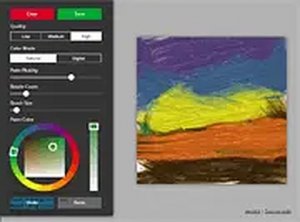
Controls are limited to a few intuitive options: a color picker, brush size slider, and a few brush shape choices. This minimal interface removes barriers between the player and the creative process. You can switch between broad washes and fine lines instantly. There is no undo button, which encourages acceptance of happy accidents. The lack of complex menus means you spend more time painting and less time navigating settings.
Open-Ended Creative Space
There are no levels, scores, or timers. The canvas is a blank space that resets with a single click. This design philosophy prioritizes process over product. Players can create a single detailed composition or a series of quick experiments. The absence of goals makes it suitable for stress relief or meditative practice. Some users treat it as a digital sketchbook, while others use it to explore color theory without wasting physical materials.
Browser Accessibility
This tool runs entirely in modern web browsers without plugins or downloads. Full-screen mode removes browser chrome for an immersive experience. Performance remains smooth even with multiple layers of paint on the canvas. The lightweight design means it works on older computers and tablets. This accessibility allows anyone with an internet connection to engage in creative play without technical barriers.